Ryle’s Tube Feeding / Peg Feeding
Specialized Nutritional Support: Compassionate Ryle’s Tube and PEG Feeding Services.
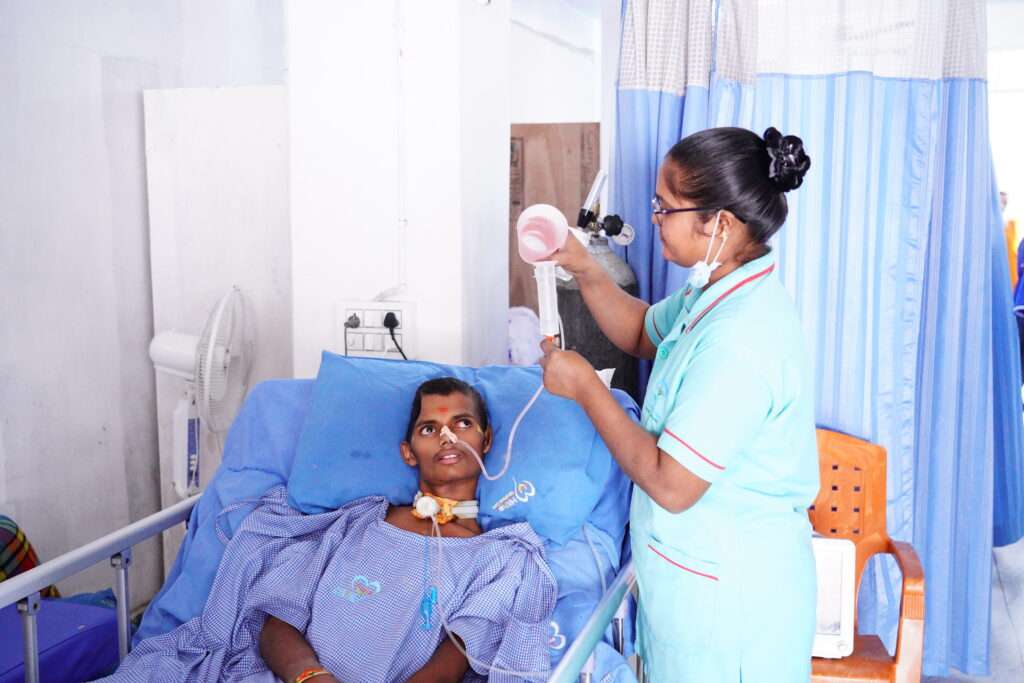
What are Feeding Tubes?
Feeding tubes are thin, flexible tubes that are inserted into the body to deliver nutrition directly to the stomach or small intestine. There are two main types of feeding tubes:
Nasogastric (NG) Tube: This tube is inserted through the nose and passes down into the stomach. It is typically used for short-term feeding.
Gastrostomy (G) Tube: This tube is surgically placed directly into the stomach through the abdominal wall. It is used for long-term feeding.
Who Can Benefit from Feeding Tubes?
Feeding tubes can benefit patients who are unable to eat or drink adequately due to various conditions, such as:
- Stroke
- Head or neck injury
- Neurological disorders
- Gastrointestinal
- disorders
- Severe burns
- Post-surgery recovery


🍽️ Ryle’s Tube & PEG Feeding Care
Safe, sterile, and compassionate feeding care for patients with swallowing or digestive challenges.
We provide expert assistance for Ryle’s tube (nasogastric) and PEG (stomach tube) feeding — ensuring your loved one gets essential nutrition and hydration, either at home or in clinical care.
🧠 What Are These Feeding Methods?
- Ryle’s Tube Feeding (Nasogastric Tube):
A thin tube passed through the nose into the stomach for short-term nutritional support. - PEG Feeding (Gastrostomy Tube): A feeding tube surgically placed through the abdomen into the stomach, ideal for long-term care.
| 🧩 Service | 💬 Description |
|---|---|
| 🧑⚕️ Trained Nurse Assistance | Feeding administered by qualified professionals to avoid aspiration or complications |
| 🧴 Nutrition Managementt | Preparation and administration of prescribed feeds, vitamins, and supplements. |
| 🧼 Tube Site Cleaning & Hygiene | Prevent infection by cleaning the insertion site and monitoring for redness or leaks. |
| 🔄 Tube Flushing & Maintenance | Ensures tubes remain unclogged and functioning correctly. |
| 📋 Monitoring & Documentation | Regular checks on weight, intake, and tolerance levels for personalized care. |
| 🧘 Positioning & Patient Comfort | Ensuring correct posture during and after feeding to prevent reflux or aspiration. |
| 👨👩👧 Family Education & Support | Teaching caregivers how to manage tube feeding with confidence and hygiene |